
In stock
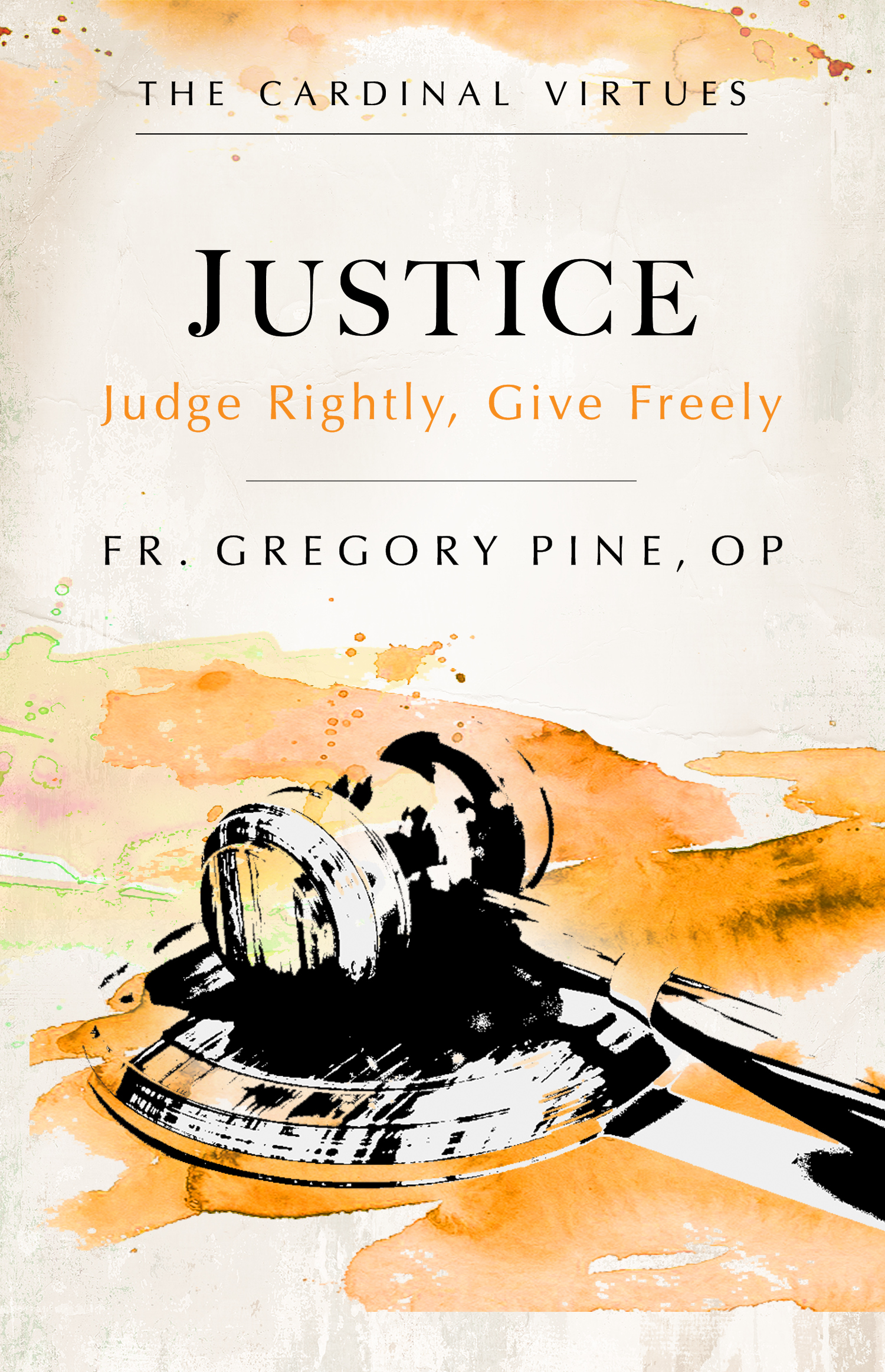
Upon hearing justice, you might imagine a cold legal standard or perhaps a contentious issue in contemporary debates on civil liberties. But, truth be told, justice is less about what others owe us and more about becoming a genuinely free person. Authentic justice is a life giving cardinal virtue that shapes all our relationships — with God and with others — one that empowers us to become the kind of people who can freely give what is right.
In this rich and practical exploration, Fr. Gregory Pine, O.P., shows how justice — rightly understood — anchors our relationships, orders our interactions, and empowers us to live with purpose.
In this book, you will discover:
- How to cultivate just habits that root you in authentic freedom
- Why seeing life as gift changes everything, including how you respond to injustice
- The power of law — eternal, natural, divine, and human — to guide you toward a good and joyful life
- What we owe to our communities, and why seeking the common good liberates the individual
- Why love and mercy go beyond justice, fulfilling it rather than replacing it
Grounded in Sacred Scripture, the wisdom of the Church, and the realities of lived human experience, Justice offers a clear path to judging rightly, giving freely, and flourishing in the life God desires for you.
Purchase for your Kindle
Purchase for your Nook
Purchase for your Nook
| Pages | 176 |
|---|---|
| Copyright | 2026 |
| ISBN | 978-1-68192-969-9 |
| Item | T2835 |
Related Products

Prudence: Choose Confidently, Live Boldly
No, this isn’t your grandmother’s definition of prudence. This virtue actually inspires practical wisdom, allowing us to choose well and to bring order into our lives. In Prudence: Choose Confidently, Live Boldly, Fr. Gregory Pine, OP, aims to work prudence back into the conversation and to explain how it can transform us along our path toward what really matters.
Fr. Gregory Pine, OP
Item: T2603

Saints and Social Justice: A Guide to Changing the World
Rediscover Catholic social teaching through the lives of the saints. Follow in their footsteps, learn from their example, and become the spark of authentic social justice in the world today.
Brandon Vogt
Item: T1395
.png?v=638959585147557794)
Rerum Novarum
In his encyclical letter Rerum Novarum, Pope Leo XIII takes up the condition of the working classes and the challenges facing the world following the Industrial Revolution, focusing on the relationship between labor and capital, the rights of workers, and the role of the Church in promoting justice. Promulgated in 1891, this foundational text has shaped Catholic social teaching and influenced more than a century of the Church's balanced approach to defending workers' rights while upholding the right to private property and rejecting socialism.
Pope Leo XIII
Item: T3025

Saint Dominic's Way of Life: A Path to Knowing and Loving God
Few Catholics today know much about Saint Dominic, who died eight hundred years ago in 1221. Unlike Francis of Assisi, Teresa of Ávila, or Ignatius of Loyola, Dominic did not leave a deposit of writings to be examined and built upon. Yet this medieval Spaniard still has much to teach us today, and we see this in the way of life he left to the Church.